What if we stopped trying to live everywhere except here?
Learning to come back to the moment we are actually in. I’ve been thinking a lot lately about how rarely we are actually where we are. We might be sitting quietly with a cup of tea, but our mind is replaying something that happened yesterday. We might be spending time with someone we love, but worrying about something that could happen next week. We might be on holiday, standing somewhere beautiful, and already thinking about where we need to go next. Our bodies can be in the present while our minds are somewhere else entirely. And perhaps, quite understandably, this is something many of us learn to do.
The past can follow us. Our past experiences shape us. The things that have happened to us, the relationships we have experienced, the things we have been told about ourselves, and the times when we have felt hurt, rejected, frightened or unsafe can all influence the way we see the world. Sometimes we carry those experiences into the present without even realising it. A previous relationship might make us wary in a new one. Being let down in the past might make us expect to be let down again. Something that happened years ago might influence the way we respond to something happening today.
Our past can become a kind of reference point: This happened before, so perhaps it will happen again.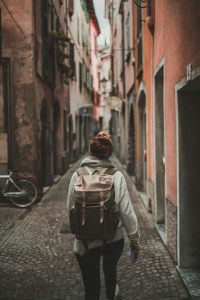
And then there is the future. The future can come with us too. Our minds are remarkably good at trying to anticipate what might happen.
What if…?
What if something goes wrong?
What if I can't cope?
What if they leave?
What if I lose my job?
What if something happens to someone I love?
Sometimes we try to prepare ourselves for every possible outcome because we believe that if we can anticipate it, perhaps we can protect ourselves from it.
And so we can end up living in the past and the future while missing the only moment we actually have any influence over:
this one.
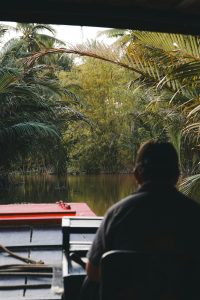
I noticed this in my own life. I’ve been thinking about this through travelling. I used to try to fit as much as possible into a holiday. I wanted to see everything, do everything and make the most of every day. One place, then another. Something else to see. Somewhere else to go. Another experience to tick off. And I would come home exhausted. Sometimes I realised that although I had seen and done so much, the memories had almost blurred into one another. There had been so much stimulation that I hadn't necessarily had the opportunity to really experience any of it. So I've started doing things differently.
I might do less in a day.
I might sit somewhere for longer.
I might walk without needing to get anywhere.
I might notice the sounds around me, the smell of the air, the warmth of the sun, the feeling of the ground beneath my feet.
I might simply stop.
And strangely, by doing less, I often feel as though I have experienced more.
Perhaps we don't always need more. There is something quite powerful about allowing ourselves to experience rather than consume. We live in a world that encourages us to fill our time.
More experiences.
More productivity.
More information.
More plans.
More things to achieve.
Even rest can sometimes become something we feel we need to be good at. But what happens when we stop trying to fill every moment? What happens when we allow ourselves to simply be where we are? Perhaps we notice that the cup of tea is actually warm. Perhaps we hear the birds outside. Perhaps we notice that our shoulders are tense. Perhaps we realise that we are tired. Perhaps we notice that we are actually enjoying ourselves. Perhaps we notice another person properly because we aren't already thinking about what we need to do next.
 Coming back to the present. This doesn't mean that we should forget our past. Our experiences matter. They have shaped us, and sometimes we need to look back, understand what has happened, and make sense of it. And it doesn't mean that we shouldn't think about the future.
Planning can be helpful. Looking ahead can help us make choices and prepare for things that matter to us. The difference may be in whether we are visiting the past or living there, and whether we are planning for the future or constantly worrying about it.
There is a difference between preparing for something and repeatedly imagining everything that could go wrong.
There is a difference between remembering something and reliving it. And there is a difference between looking forward to something and being so focused on what comes next that we miss what is happening now.
What does the research say?
Mindfulness research gives us some useful support for this idea. Mindfulness generally involves bringing attention to present-moment experience with an attitude of openness and without immediately judging or trying to change what we notice. Research has found that mindfulness-based interventions can produce small to moderate reductions in anxiety and other aspects of psychological stress. A large systematic review of 47 trials involving more than 3,500 people found improvements in anxiety, depression and pain. However, the researchers also emphasised that the effects were generally modest and that mindfulness is not necessarily more effective than other helpful approaches.
There is also evidence suggesting that mindfulness and meditation can influence some physiological markers associated with stress, including measures such as cortisol, heart rate and blood pressure. More recent research continues to find benefits from mindfulness-based approaches for stress and anxiety, although, as with any area of psychological research, the findings need to be interpreted carefully rather than suggesting that mindfulness is a cure-all.
So perhaps the invitation isn't to worry, never remember, or never plan.
It is simply to notice when your mind has wandered somewhere else, and gently come back.
Just for now
You don't need to meditate for an hour.
You don't need to empty your mind.
You don't need to become somebody who lives perfectly in the present.
Perhaps you could pause for a moment.
Notice where you are.
Look around you.
What can you hear?
What can you smell?
What can you feel?
What is happening in your body?
And then perhaps remind yourself:
I am here.
This is what is happening right now.
The past has happened.
The future hasn't happened yet.
And whatever comes, I will meet it when it arrives.
For now, I can be here.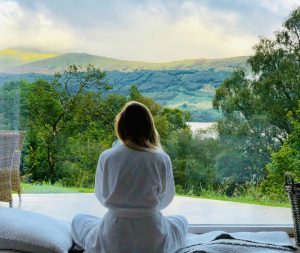
Just here.
And perhaps, sometimes, that is enough.